Ursula
Much Ado About NothingUrsula is Hero’s companion, confidante, and practical ally, but her importance extends beyond private friendship. She helps stage the overheard conversation that makes Beatrice believe Benedick loves her, and she later delivers the urgent news that Hero’s public disgrace was founded on deception. Through her, the play’s language of wit becomes an instrument of repair: concealment first redirects a resistant heart, while plain report later restores a damaged reputation.
Identity and Introduction
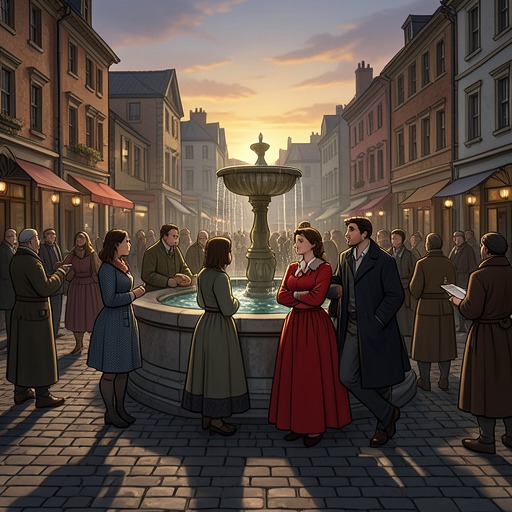
Ursula first appears among the masked revellers gathered with Don Pedro, Claudio, Benedick, Don John, Borachio, Margaret, and others. The masks place her within a social world organized by disguise, recognition, and misrecognition, yet her subsequent conduct shows that she is unusually alert to how people speak and how identities are performed. During the masked exchange, she recognizes Antonio through his wit and insists that virtue cannot remain hidden behind a disguise. Her recognition is not based merely on costume or appearance; it treats verbal intelligence as a durable sign of character.
Her association with Hero is made explicit when she joins Hero and Margaret in Leonato’s garden. The garden becomes the controlled setting for a carefully arranged conversation, with Beatrice concealed nearby and listening. Ursula therefore enters the plot not as a passive attendant but as one of the people who can move between visible social performance and hidden knowledge. She understands both the public scene and the private corner from which that scene is overheard.
The Garden Deception
Ursula’s central action is her collaboration with Hero in the plan to alter Beatrice’s understanding of Benedick. Hero directs Margaret to summon Beatrice, while Ursula helps sustain the conversation that Beatrice will overhear. When Beatrice draws close to the ground to listen, Ursula compares the spectacle to angling and imagines Beatrice as a fish cutting through a silver stream. The image turns surveillance into playful capture: Beatrice believes herself an observer, but the conversation has been designed to catch her attention and redirect her feelings.
The deception succeeds because Ursula performs a controlled conversational role. She speaks as though Hero and she are discussing Beatrice’s supposed love for Benedick, presenting that love as intense but impossible because Beatrice is too proud to confess it. The conversation gives Beatrice a new interpretation of her own resistance. Rather than confronting her directly, Ursula lets Beatrice discover the possibility indirectly, through a performance that appears not to be addressed to her at all.
Ursula also helps preserve the fiction after Beatrice has been caught by it. Hero later declares that Beatrice is caught, using the language of birdlime, while Ursula’s earlier fishing imagery has already established the same structure of pursuit and capture. The repeated images show the plan’s method: Beatrice’s wit and vigilance are not defeated by force, but redirected through a scene in which her own curiosity becomes the mechanism of her change.
Speech, Recognition, and Social Intelligence
Ursula’s speech is marked by confidence in the evidentiary power of language. She recognizes Antonio by his “excellent wit,” arguing that virtue will reveal itself even when a person is disguised. This principle illuminates her wider role. Costumes may confuse the eye, but speech can expose identity; conversely, speech can also construct a persuasive appearance that listeners accept as truth. Ursula is skilled in both forms of verbal action.
Her conversational intelligence differs from Beatrice’s openly combative wit. Beatrice uses interruption, dismissal, and verbal attack to protect her independence, while Ursula works through indirection and coordinated performance. She does not need to dominate the exchange. Her strength lies in managing its rhythm, choosing what another character will overhear, and allowing an apparent accidental discovery to produce a deliberate emotional result. In this sense, Ursula is a director within the social world of the play, arranging speech so that its effects exceed its literal surface.
Her method also contrasts with the destructive deception associated with Don John. Ursula’s concealment is purposeful but reparative within the comic courtship plot: it guides Beatrice toward a relationship that Hero and the others judge desirable. Don John’s deception, by contrast, produces false accusation and public dishonour. The contrast does not make deception simple; it shows that its moral and social consequences depend on who controls the performance, what the performance seeks to change, and whether the result can be corrected.
Loyalty to Hero and the Movement Toward Marriage
Ursula’s loyalty to Hero appears in the garden plot and in the larger effort to secure a good husband for Beatrice. Hero is willing to perform a modest service for her cousin, and Ursula participates in that service by helping convert private resistance into mutual attachment. Their cooperation makes female friendship an active force in the marriage plot rather than a decorative background to male courtship.
Ursula’s role is also connected to the play’s repeated concern with marriage as a social and emotional transformation. Beatrice has rejected the prospect of marriage in sharply contemptuous terms, describing men as earth, dust, or wayward clay and treating marriage within ordinary human kinship as nearly absurd. The garden deception answers that resistance not with an argument or command, but with a staged account of love that allows Beatrice to reconsider the identity she has made through opposition. Ursula helps create the conditions in which that reconsideration becomes possible.
The marriage plot, however, remains shadowed by the vulnerability of women’s reputations. At the wedding crisis, Claudio asks Leonato to question Hero and obtain a truthful answer through paternal authority. Ursula is not shown conducting that interrogation, but her later report exposes the scale of the error surrounding it. The play thus places her constructive manipulation of private conversation beside the destructive public consequences of men treating accusation as proof.
The News of False Accusation
After the crisis, Ursula re-enters in haste and summons Beatrice to her uncle. She reports that there is disorder at home, that Lady Hero has been proved falsely accused, and that the Prince and Claudio were seriously deceived. She identifies Don John as the author of the plot and adds that he has fled. This report supplies the essential reversal in Beatrice’s understanding of the wedding disaster: Hero is not dead in the moral sense created by the accusation, but wronged; Claudio and Don Pedro are not reliable judges in that moment, but victims of manipulation; and Don John’s absence is itself linked to guilt.
The timing of Ursula’s message is decisive. Beatrice has just demanded action against Claudio, lamenting that she cannot become a man and that she would die as a woman through grief. Benedick responds by declaring his love and agreeing to challenge Claudio, promising to make him answer for what he has done. Ursula’s arrival changes the practical direction of the scene. Beatrice must now return to the household and comfort Hero, while Benedick goes toward the consequences of the challenge. Ursula’s brief report therefore bridges emotional crisis and plot repair.
Her communication also echoes her earlier work in the garden. In both scenes, she controls access to knowledge. Earlier, she helps create a false-seeming conversation that changes Beatrice’s feelings; later, she delivers a corrective account that changes Beatrice’s understanding of the accusation. In the first case, hidden speech produces love; in the second, urgent speech restores the truth on which justice and reconciliation can proceed.
Narrative Role and Significance
Ursula is a supporting character with unusually high structural importance. She belongs to the network of women who observe, interpret, and intervene while male authority repeatedly misreads appearances. Her recognition of Antonio, her participation in the garden plot, and her report of Hero’s vindication all depend on the same capability: she can distinguish social performance from the consequences it generates.
Her role is especially significant because she links comedy and crisis without confusing them. The garden deception uses theatrical concealment to overcome Beatrice’s resistance and make marriage imaginable. The later news of Hero’s false accusation reveals that theatrical signs can also be weaponized against a woman in public. Ursula does not erase that danger, but her actions help expose the difference between a controlled fiction undertaken by allies and a malicious fiction designed to destroy honour.
At the play’s end, Benedick announces his intention to marry Beatrice and rejects the power of satirists and epigrammatists to drive him back into his former single life. Ursula’s earlier intervention has helped make that transformation possible, while her later report ensures that the couple’s personal resolution takes place after Hero’s wrong has been recognized. She is therefore both a maker of comic misdirection and a messenger of moral clarification: a figure whose verbal intelligence helps move the story from resistance, through deception and disgrace, toward restored knowledge and marriage.